
Fromscatteredfilesto oneconnectedshippingsystem.
Cloud software for freight, clearance, and trade—operations and finance in one place.

e-shipment organizes international shipping operations and the financial workflows connected to them.


Growth makes scattered work expensive.
What feels manageable with a few shipments becomes delay, repeated entry, weak control, and unclear reporting as the operation expands.
e-shipment clears the path.
Shipping operations are harder than they should be
Without the right tools, small issues compound into costly delays and frustrated teams.
Scattered data
Customer data split across files and people.
Tracking difficulties
Hard to know shipment status quickly.
Address mistakes
Mistakes in addresses or consignee details.
Disconnected finance
Invoices and payments not clearly linked.
Knowledge dependency
Heavy reliance on one employee who "knows everything."
Slow reporting
Reports take too long to generate and act on.
How e-shipment runs your operation
Foundation
System definitions, customers, and agreements; everything shipments depend on.
Set up master definitions
Countries, cities, currencies, exchange rates, shipping types, container sizes, and invoice types.
Create the customer record
Capture contacts, classification, and documentation in one profile.
Record agreements
Register terms and operating agreements with each customer.
Shipment operations
Requests, details, and connections from desk to dock.
Create orders
Add requests with notes or approvals when needed.
Add the shipment
Specify details, addresses, shipping type, consignee or importer.
Link suppliers or products
Connect supply or specific products when the job requires it.
Finance & oversight
Money movement, reporting, and traceability.
Run financial movements
Invoices, receipts, payments, and journal entries.
Generate reports
Statements, balances, ledgers, and advanced operational or financial reports.
Review audit logs
See who added or changed what, when needed.
The complete operating system for modern shipping companies.

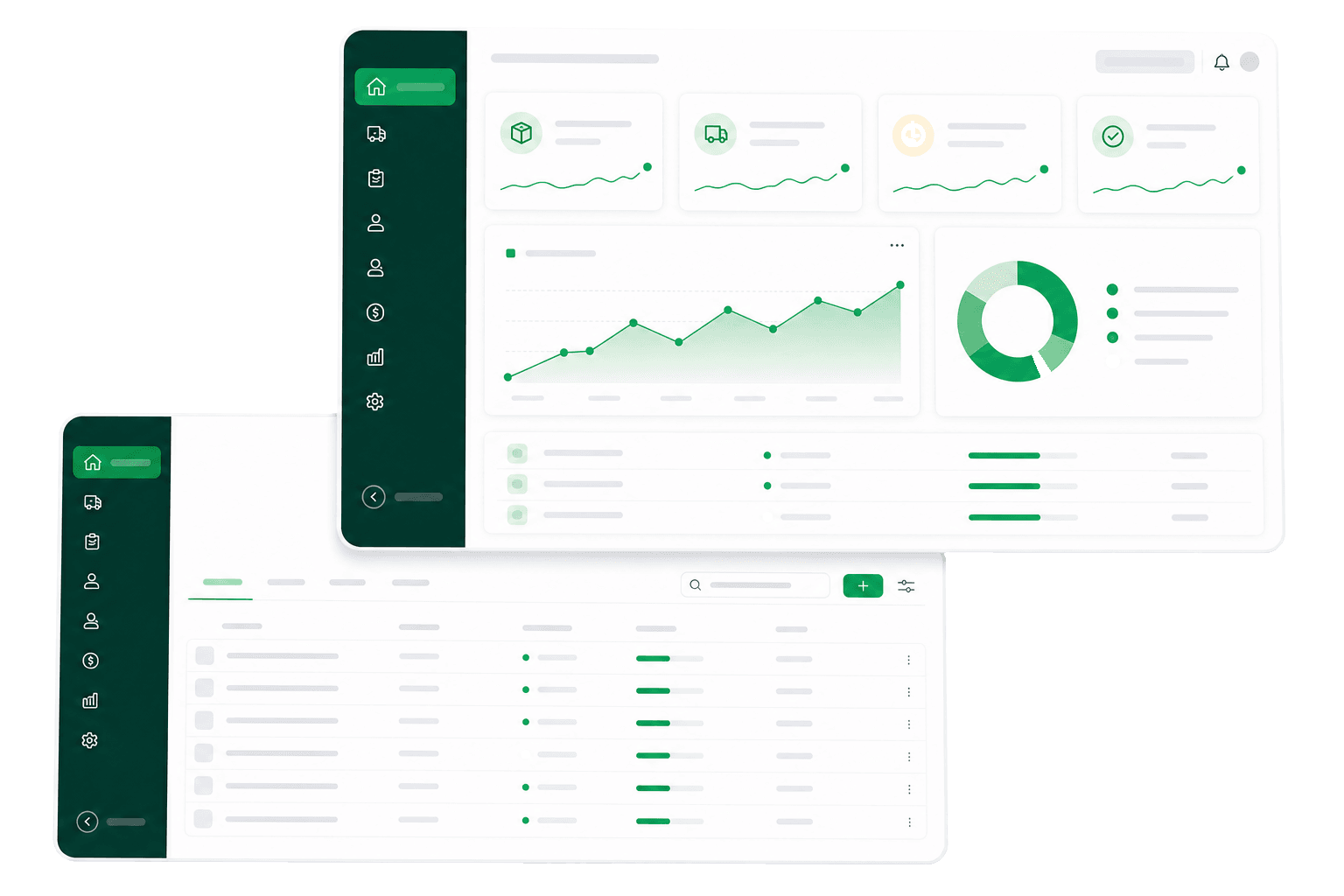
Dashboard
Real-time visibility. Smarter decisions. Total control from a single, unified view.




Built for companies that move goods and manage complexity.
Use e-shipment without on‑prem servers or heavy setup.
Cloud architecture lets you start quickly—we handle infrastructure, security, and updates.
Software only helps when your team can run it confidently.
The team behind e-shipment
Common questions about e-shipment.
Answers about the platform, rollout, and features.
No. e-shipment is cloud‑based, so you avoid complex on‑premises infrastructure. We handle hosting, backups, and updates.
Yes. Smaller teams get clear structure from day one; larger teams use permissions and richer reporting as they scale.
No. e-shipment is a full operating system: customers, agreements, suppliers, finance, permissions, and reporting—not only tracking.
Yes. We train on navigation, workflows, and reporting so teams use the system with confidence.
Connecting the full workflow in one platform—from customer and order through shipment to invoice and report.
Yes. Role‑based access—for example operations vs finance vs management—so people see what they need.
Yes: accounts, banks, receipts, payments, journals, invoices, currencies, and exchange rates.